Joseph Lister, Baron Lister of Lyme Regis OM, PC, PRS, FRCSE, FFPS (5 April 1827 – 10 February 1912[1]), was a British surgeon, medical scientist, experimental pathologist and a pioneer of antiseptic surgery[2] and preventative medicine.[1] Joseph Lister revolutionised the craft of surgery in the same manner that John Hunter, revolutionised the science of surgery.[3]
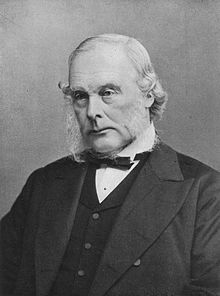


From a technical viewpoint, Lister was not an exceptional surgeon,[2] but his research into bacteriology and infection in wounds, raised his operative technique to a new plane where his observations, deductions and practices revolutionised surgery throughout the world.[4]
Lister promoted the idea of sterile surgery while working at the Glasgow Royal Infirmary. Lister successfully introduced carbolic acid (now known as phenol) to sterilise surgical instruments and to clean wounds.
Applying Louis Pasteur's advances in microbiology, Lister championed the use of carbolic acid as an antiseptic, so that it became the first widely used antiseptic in surgery. He first suspected it would prove an adequate disinfectant because it was used to ease the stench from fields irrigated with sewage waste. He presumed it was safe because fields treated with carbolic acid produced no apparent ill-effects on the livestock that later grazed upon them.
Lister's work led to a reduction in post-operative infections and made surgery safer for patients, distinguishing him as the "father of modern surgery".[5]
Early life
Lister was born to a prosperous, educated Quaker family in the village of Upton, West Ham, Essex, then near but now in London,[6] England. He was the fourth child and second son of four sons and three daughters[7] born to gentleman scientist and port wine merchant Joseph Jackson Lister and Isabella Lister née Harris[8] and were married on the 14 July 1818 in Ackworth, West Yorkshire.
Lister's paternal great-great grandfather Thomas Lister, was the last of several generations of farmer's who lived in Bingley in West Yorkshire.[9] Lister joined the Society of Friends as a young man and passed his beliefs to his son, Joseph Lister.[9] He moved to London in 1720 to open a tobacconist [9] in Aldersgate Street in the City of London.[10] His son, John Lister (1737-1835) was born there. Lister's grandfather's was apprenticed to a watchmaker, Isaac Rogers,[11] in 1752 and followed that trade on his own account in Bell Alley, Lombard Street from 1759 to 1766. He then took over his father's tobacco business,[9] but gave it up in 1769 in favour of working at his father-in-law Stephen Jackson's business as a wine-merchant in Lothbury.[10]
His father was a pioneer in the design of achromatic object lenses for use in compound microscopes[6] He spent 30 years perfecting the microscope, and in the process, discovered the Law of Aplanatic Foci,[12] building a microscope where the image point of one lens coincided with the focal point of another.[6] Up until that point, the best higher magnification lenses produced an excessive secondary aberration known as a coma which interfered with normal use.[6] It was considered a great technical advance that enabled the future development of bacteriology.[13] His work, built a reputation sufficient to enable his being elected to the Royal Society in 1832.[14][15] His mother, Isabella was the youngest daughter of master mariner Anthony Harris.[16] Isabella worked at the Ackworth School, a Quaker school for the poor, assisting her widowed mother who was the superintendent of the school.[16]

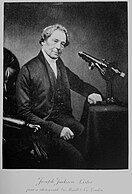
The eldest daughter of the couple was Mary Lister (1820–1894), eldest sister to Joseph Lister. On 21 August 1851, she married the barrister, Rickman Godlee[17] of Lincoln's Inn and the Middle Temple, who belonged to the friends meeting house in Plaistow.[18] The couple had six children. Their second child was Rickman Godlee (1849-1925), a neurosurgeon who became Professor of Clinical Surgery at the University College Hospital.[19] and surgeon to Queen Victoria. He became Lister's biographer in 1917[19] The eldest son of Joseph and Isabella Lister was John Lister (1822-1846) who died of a painful brain tumour.[20] With Johns passing, Joseph became the heir of the family.[20] The couple's second daughter was Isabella Sophia Lister (1823-1870) who married the Irish Quaker Thomas Pim[21] in 1848. Lister's other brother was William Henry Lister (1828-1850) who died after a long illness.[7] The youngest son of the couple was Arthur Lister (1830–1908), a wine merchant, botanist and lifelong Quaker, who studied Mycetozoa.[22] He worked alongside his daughter Gulielma Lister to produce the standard monograph on Mycetozoa and both were awarded Fellowship of the Royal Society.[23] The couple's last child was Jane Lister (1832-1920) who married Smith Harrison, a wholesale tea merchant, who was marrying for a second time.[24]
After their marriage, the Listers lived at 5 Tokenhouse Yard in Central London for three years until 1822, where they ran a port wine business in partnership with Thomas Barton Beck.[25] Beck was the grandfather of the professor of surgery and proponent of the germ theory of disease, Marcus Beck[16] who would later promote Lister's discoveries, in his fight to introduce antiseptics.[26] In 1822, Lister's family moved to Stoke Newington.[27] In 1826, the family moved to the Upton House, a long low Queen Anne style mansion[27] that came with sixty-nine acres of land.[28] It had been rebuilt in 1731, to suit the style of the period.[29]

Education
School
As a child Lister attended Benjamin Abbott's Isaac Brown Academy, a private,[30] Quaker school in Hitchin in Hertfordshire.[31] When Lister was older he attended Grove House School in Tottenham, also a private Quaker School,[31] studying mathematics, natural science, and languages. His father was insistent that Lister received a good grounding in French and German, in the knowledge he would learn Latin at school.[32] From an early age, Lister was strongly encouraged by his father.[6] He became interested in natural history that led to dissections of small animals, fish and osteology, that were examined using his father's microscope[33] and then be drawn using the camera lucida technique, that his father had taught him[16] or sketched.[31] His father's interests in microscopical research, developed in Lister the determination to become a surgeon[33] and prepared him for a life of scientific research.[6]
Lister left school in the spring of 1844, when he was seventeen.[31] He was unable to attend either Oxford or the University of Cambridge owing to the religious tests that effectively barred him.[6] So he decided to apply to the non-sectarian University College London Medical School, one of only a few institutions in Great Britain that accepted Quakers at that time.[34]

University
Although his father wanted him to continue his general education,[35] the university had demanded since 1837, that each student obtain a Bachelor of Arts (BA) degree before commencing medical training.[36] For his BA, Lister initially studied arts.[6] In December 1846, Lister was present at a famous operation by Robert Liston, who conducted an limb amputation on a patient, who had been anaesthetised using ether[37] by Lister's classmate, William Squire.[38]
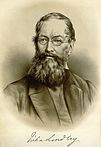
In 1847, Lister graduated with a degree with a distinction in classics and botany in 1847.[6] While he was studying, Lister suffered from a bout of smallpox, a year after his elder brother died of the disease.[6] The bereavement combined with the stress of his classes led to a nervous breakdown.[6] Lister decided to take a long holiday in Ireland,[30] to recuperate and this delayed the start of his medical studies at the university.[30] In October 1848, Lister registered as a medical student.[30] While a student, Lister developed a lifelong interest in histology and experimental physiology.[6] During his studies, Lister was active in the University Debating Society and the Hospital Medical Society.[16] His main lecturers were John Lindley (1799-1865) professor of botany, Thomas Graham (1805-1869) professor of chemistry, Robert Edmond Grant (1793-1874) professor of comparative anatomy, George Viner Ellis (1812-1900) professor of anatomy and William Benjamin Carpenter (1813-1885) professor of medical jurisprudence.[30] Although Lister often spoke highly about Lindley and Graham in his writings, it was Wharton Jones (1808-1891) professor of ophthalmic medicine and surgery and William Sharpey (1802-1880) professor of physiology, who exercised the greatest influence on Lister.[30] As a student, Lister was greatly attracted by Dr. Sharpey's lectures, which inspired in him, a love of physiology that never left him.[39]
Wharton Jones was praised by Thomas Henry Huxley for the method and quality of his physiology lectures.[30] As a clinical scientist working in physiological sciences, he was foremost in the number of discoveries he made.[30] He was also considered a brilliant ophthalmic surgeon, his main field.[30] He conducted research into the circulation of the blood and phenomena of inflammation that was carried out on the frog's web and the bat's wing, and no doubt suggested this method of research to Lister.[30] Sharpey was called the father of modern physiology as he was the first to give a series of lectures on the subject.[30] Prior to that the field has been considered part of anatomy. [30] Sharpey studied at Edinbugh university, then went to Paris to study clinical surgery under the French anatomist Guillaume Dupuytren and operative surgery under Jacques Lisfranc de St. Martin. It was in Paris that Sharpey met Syme and became life-long friends.[30] After moving to Edinburgh, he taught anatomy with Allen Thomson as his physiological colleague. He left Edinburgh in 1836, in order to become the first Professor of Physiology at University College, London[30]
Clinical instruction
Before he qualified for his degree, Lister had to undertake two years of clinical instruction.[36] He began as an intern and then house physician to Walter Hayle Walshe (1812-1892).[16] professor of pathological anatomy and author of 1846 study, The Nature and Treatment of Cancer.[40] Then in his second year in 1851, Lister became a house surgeon, i.e., a dresser, to John Eric Erichsen (1818-1896) professor of surgery[41] and author of the 1853 Science and Art of Surgery[42] described as one of the most celebrated textbooks on surgery in the English language.[43] The book went through many editions, of which Marcus Beck edited the 8th and 9th editions, adding Lister's antiseptic techniques and Pasteur and Robert Koch's germ theory.[44] It was while Lister worked for Erichsen, that his interest in the healing of wounds began.[41]
Lister's first operation
On 26 June 2013, medical historian Ruth Richardson and orthopaedic surgeon Bryan Rhodes published a paper, in which they described their discovery of Lister's first operation, that they made while they were both researching his career.[37] At 1pm on 27 June 1851, Lister was a second-year medical student and working at a casualty ward in Gower Street, conducted his first operation. The operation was on Julia Sulivan, a mother of eight grown children. She had been stabbed in the abdomen by her husband, a drunk and ne'er-do-well, who was taken into custody.[45] On the 15 September 1851, Lister was called as a witness to his trial at the Old Bailey.[45] His testimony helped convict the husband, who was transported to Australia for 20 years.[45]
Lister found the woman with a coil of intestine about eight inches across, consisting about a yard of the small intestines, that were damaged in two places, protruding from her lower abdomen. The abdomen itself contained three open wounds.[37] After cleaning the intestines with blood-warm water, Lister was unable to place them back into the body, so he took the decision to extend the cut.[37] They were then placed back in the body, the wounds sewn shut and the abdomen sutured.[37] The patient was administered opium to induce constipation, to enable the intestines to recover. Sulivan recovered her health.[37] It was a full decade before his first public operation in the Glasgow Infirmary.[37]
This operation was missed by historians.[37] Liverpool consultant surgeon John Shepherd, in his essay on Lister, Joseph Lister and abdominal surgery, written in 1968,[46] failed to mention the operation, instead starting his dates from the 1860's onwards. He apparently had no clue of what Lister accomplished.[37]
Microscope experiments 1852
Lister wrote his first paper "Observations on the Contractile Tissue of the Iris"[47] while he was still at university. It was considered good enough[48] to be published in the Quarterly Journal of Microscopical Science in 1853. On the 11 August 1852, Lister was presented with piece of a fresh human iris by Wharton Jones, at the University College Hospital. Lister was present at the operation conducted by Jones[49] and took the rare opportunity to study the iris.[50] Lister reviewed the existing research, as well as studying tissue from a horse, a cat, a rabbit and a guinea-pig as well as taking six surgical specimens from patients who underwent a surgical operation on their eye.[13] Lister was unable to complete the research to his satisfaction, due to the need to pass his final examination. He offered an apology in the paper:
- My engagements do not allow me to carry, the inquiry further at present; and my apology for offering the results of an incomplete investigation is that a contribution tending, in however small a degree, to extend our acquaintance with so important an organ as the eye, or to verify observations that may be thought doubtful, may probably be of interest to the physiologist.[48]
The paper advanced the work of Swisss physiologist Albert von Kölliker, demonstrating the existence of two distinct muscles, the dilator and sphincter in the iris,[33] that corrected the convictions of previous researchers that there was no dilator pupillae muscle.[13]
His next paper was an investigation into Goose bumps[51] in a paper titled, "Observations on the Muscular Tissue of the Skin",[52] was published on 1 June 1853, in the same journal.[53] Lister was able to confirm Kölliker's experimental studies, that in humans the smooth muscle fibres are responsible for the erectile function of hair, in contrast to other mammals in which large tactile hairs are associated with striated muscle.[13] Lister demonstrated a new method of creating histological sections from the tissue of the scalp.[53][54]
Lister's microscopy skills were so advanced that he was able to correct the observations of German histologist, Friedrich Gustav Henle, who mistook small blood vessels for muscle fibres.[13] In each of the papers, he created camera lucida drawings that were so accurate, they could be used to scale and measure the observations.[53]
Both papers attracted significant attention both in Britain and abroad.[54] The naturalist Richard Owen, who was an old friend of Lister's father was particularly impressed by both papers.[54] Owen contemplated recruiting Lister for his own department and forwarded him a thank-you letter on 2 August 1853.[54] Kölliker was particularly pleased at the analysis that Lister has formulated. Kölliker who made many trips to Britain, would eventually meet Lister and became life-long friends.[54] Their close frienship was described in a letter sent by Kölliker on 17 November 1897, that Rickman Godlee choose to use to illustrate their relationship.[55] Kölliker sent a letter to Lister, when he was president of the Royal Society, congratulating Lister on receiving the Copley medal and fondly remembered his old friends who had died and his time in Scotland along with Syme and Lister.[55] Kölliker was 80 years old at the time. [55]
Graduation
Lister graduated with Bachelor of Medicine with honours, in the autumn 1852.[56] During his final year, Lister won several prestigious awards, that were heavily contested among the student body of the London teaching hospitals.[57] He won the Longridge Prize For the greatest proficiency evinced during the three years immediately preceding, on the Sessional Examinations for Honours in the classes of the Faculty of Medicine of the College; and for creditable performance of duties of offices at the Hospital that included a £40 stipend.[57] He was also awarded a gold medals in Structural and Physiological Botany.[57][58] Lister obtained two of the four available gold medals in Anatomy and Physiology as well as surgery, that came with a medal scholarship of £50 a year, for two years, for his second examination in medicine.[57] In the same year, Lister passed the examination for the fellowship of the Royal College of Surgeons,[56] bringing to a close nine years of education.[56]
With his medical education completed, Sharpey advised Lister to spend a month at the medical practice of his lifelong friend James Syme in Edinburgh and then visit medical schools in Europe for a longer period for training.[59] Sharpey himself had been taught first in Edinburgh and later Paris. Sharpey had met Syme, a teacher of clinical surgery, who was widely considered the best surgeon in the United Kingdom[60] while he was in Paris.[61] Sharpey had gone north to Edinburgh in 1818,[62] along with many other surgeons since, due to the influence of John Hunter. [60] Hunter had taught Edward Jenner who is seen as the first surgeon to take a scientific approach to the study of medicine, that was known as the Hunterian method[63] Hunter was an early advocate for careful investigation and experimentation,[64] using the techniques of pathology and physiology to give himself a better understanding of healing than many of his colleagues.[60] For example, his 1794 paper, A treatise on the blood, inflammation and gun-shot wounds[64] was the first systematic study of swelling,[60] discovering that inflammation was common to all diseases.[65] Due to Hunter, surgery was raised from a job then practiced by hobbyists or amateurs into a true scientific profession.[60] As the Scottish universities taught medicine and surgery from a scientific viewpoint, surgeons who wished to emulate those techniques travelled north for training.[66]

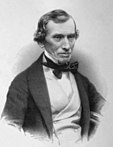


Surgical profession 1854
Scottish universities had several other features that distinguished them from the medical universities in the south.[67] They were inexpensive and didn't require religious admissions tests, attracting the most scientifically progressive students in Britain.[67] The most important differentiator, was that medical schools in Scotland had evolved from a scholarly tradition, where English medical schools relied on hospitals and practice.[67] Experimental science had no practitioners at English medical schools and while Edinburgh University medical school was large and active at the time, southern medical schools were generally moribund, their laboratory space and teaching materials being inadequate.[67] English medical schools tended to view surgery as manual labour, not a respectable calling for a gentleman academic.[67]
Edinburgh 1853–1860
- Introduction to Syme
Syme was a pioneer in creating simpler surgical procedures, who made a name for himself by first performing an amputation of the hip-joint.[68] However, Lister who anxious about his first appointment, decided to settle in Edinburgh after meeting Syme[59]
Lister arrived in Edinburgh bearing letters of introduction from Sharpey to Syme.[69] In September 1853 he began work as an assistant to Syme at the University of Edinburgh[59]
On his first meeting with Syme, Lister was invited to his house, Millbank, in Morningside (now part of Astley Ainslie Hospital),[70] where he met, amongst others, Agnes Syme, Syme's daughter by another marriage and granddaughter of the physician Robert Willis.[71][72] While Lister thought that Agnes was not conventionally pretty, he admired her quickness of mind, her familiarity with medical practice, and her warmth.[72] Lister became a frequent visitor to Millbank and met a much wider group of eminent people than he would have in London.[73] By October 1853, Lister decided to spend the winter in Edinburgh. Syme was so impressed by Lister, that after a month Lister became Syme's supernumerary house surgeon at The Royal Infirmary and his assistant in his private hospital at Minto House in Chambers Street.[70] As house surgeon, he assisted Syme during every operation, taking notes.[74] It was a much coveted position[16] and gave Lister the option of choosing which of the ordinary cases he would operate on.[75] During this period, Lister presented a paper at the Royal Edinburgh Medico-Chirurgical Society on the structure of cancellous exostoses that had been removed by Syme, demonstrating that the method of ossification of these growths was the same as that which occurs in epiphyseal cartilage.[76]
In October 1855, Lister was appointed a lecturer[77] after the death of Richard James Mackenzie.[78] Mackenzie, a noted infirmary surgeon and surgical lecturer at the Edinburgh Extramural School, had contracted cholera in Balbec in Scutari, Istanbul, while on a four-month volunteer stint as field surgeon to the 79th Highlanders in the Crimean War.[16] It had been assumed that Mackenzie would eventually take Syme's position.[78] Lister took advantage of the situation and settled in Edinburgh,[76] sucessfully transfering the lease held by Mackenzie at his lecture room at 4 High School Yards, to himself. On 21 April 1855, Lister was elected a Fellow of the Royal College of Surgeons of Edinburgh[79] and two days later, rented a house at 3 Rutland Square for living.[16] In June 1855, Lister made a hurried trip to Paris to take a course on operative surgery on the dead body and returned in June.[79]
Marriage
In August 1855, Lister became engaged to Agnes Syme.[16] During that time, when a Quaker married a person of another denomination, it would be considered as marrying out of the society.[77] After sending a letter to his parents, Lister made up his mind and subsequently left the Quakers to become a protestant, later joining the congregation of the Saint Paul's Episcopal Church, in Jeffrey Street, Edinburgh.[80] On 23 April 1856, Lister married Agnes Syme in the drawing room of Millbank, Syme's house in Morningside.[81] Only the Syme family were present.[82]
On their honeymoon, the couple spent a month at Upton and the Lake District,[81] followed by three months on a tour of the leading medical institutes in France, Germany, Switzerland, and Italy.[83] The couple returned in October 1856.[84] By this time, Agnes was enamoured of medical research and became Lister's partner in the laboratory for the rest of her life.[82] When they returned to Edinburgh, the couple moved into a rented house at 11 Rutland Street in Edinburgh.[84] The Scottish surgeon Watson Cheyne, who was almost a surrogate son to Lister, stated after his death that Agnes had entered into his work wholeheartedly, had been his only secretary, and that they discussed his work on an almost equal footing.[85] Lister's books are full of Agnes careful handwriting.[85] Agnes would take dictation from Lister, taken at hours at a stretch. Spaces would be left blank amongst the reams of Agnes' handwriting for small diagrams, that Lister would create using the camera lucida technique and Agnes would later paste in.[85]

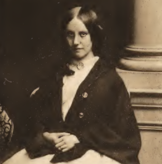
Extra-mural lecturing
On 7 November 1855, Lister gave his first extramural lecture on the "Principles and Practice of Surgery", in a lecture theatre at 4 High School Yards.[86] His first lecture was read from twenty-one pages of foolscap folio.[87] Lister's first lectures were based on notes, either read or spoken, but over time he used them less and less [88] becoming extempores in his speech, slowly and deliberately forming his argument as he went along.[89] By this deliberate way of speaking, he managed to overcome a slight, occasional stammer which, in his early days, had been more troublesome.[89]
His first student was John Batty Tuke, at the time, an anatomy demonstrator for John Goodsir [88] in a class of nine or ten, mostly consisting of dressers.[87] Within a week, twenty-three people had joined.[87] The lecture theatre was always referred to as Old Jerusalem and was directly located across from the Infirmary gates.[88]

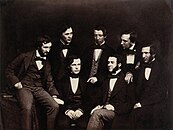
Physiological experiments 1853-1859
While he was in Edinburgh, Lister conducted a series of physiological experiments between the years 1853 and 1859.[13] His approach was rigorous and meticulous in both measurement and description.[13] Lister was clearly aware of the latest advances of physiological research in France, Germany, and other European countries[6] and maintained an on-going discussion of his observations and results with other leading physicians in his peer group including Albert von Kölliker, Wilhelm von Wittich, Theodor Schwann, and Rudolf Virchow[13] and ensured he correctly cited their work.
These experiments resulted in the publication of 11 papers between 1857 and 1859.[13] They included the study of the nervous control of arteries, the earliest stages of inflammation, the structure of nerve fibres, and the study of the nervous control of the gut with reference to sympathetic nerves.[13] He continued the experiments for three years, until he was appointed Regius Professor of Systematic Surgery at the University of Glasgow.[90] Throughout his life, Lister believed that the papers on microscopy and physiology of inflammation that he read to the Royal Society in 1857, were his most important.[13]
1855 Beginning of inflammation research
In a letter of 16 December 1855, Lister recorded the beginnings of his research to trace the process of inflammation.[91] He describes an experiment on the artery of a frog viewed under his microscope, which was subjected to a water droplet of differing temperatures, to determine the early stage of inflammation.[92] He initially applied a water droplet at 80 °F which caused the artery to contract for a second and the flow ceased, then dilated and the area turned red and the flow of blood increased.[93] He progressively increased the temperature until it was 200 °F. The blood slowed down then coagulated.[93] He continued the experiment on the wing of chloroformed bat to widen his research focus.[94]
1856 Structure of involuntary muscle fibres
Lister's third paper, "On the minute structure of involuntary muscle fibre",[95] published in 1858 in the same journal, was read before the Royal Society of Edinburgh on 1 December 1856.[95] It was research into the histology and function of the minute structures of involuntary muscle fibres.[13] The experiment was designed to confirm Kölliker's observations on the structure of individual fibres.[13] Lister proved conclusively that the muscle fibres of blood vessels, described by Lister as slightly flattened elongated elements, were similar to those found in pig intestine, that Kölliker observed.[95]
1858
His next paper, "On the flow of the lacteal fluid in the mesentery of the mouse", was a short report, based on observations that he made in 1853.[96] The paper published in 1858, also in the Quarterly Journal of Microscopical Science was an experiment by Lister to prove two goals:[55] firstly to determine the character of the flow of chyle in the lymphatics and secondly, to determine if the Lacteals in the gastrointestinal wall could absorb solid matter, in the form of granules, from the lumen.[13] For the first experiment. a mouse fed beforehand on bread and milk was chloroformed, its abdomen opened and a length of intestine placed on glass under a microscope.[55] Lister repeated the experiment several times and each time saw mesenteric lymph flowing in a steady stream, without visible contractions of the lymph vessels. For the second experiment Lister dyed some bread with indigo dye and fed it to a mouse, with the result that no indigo particles were ever seen in the chyle.[97]
Seven papers on the origin and mechanism of inflammation
In 1858, Lister published seven papers on physiological experiments he conducted on the origin and mechanism of inflammation.[13] Two of these papers were research into the nervous control of blood vessels, "An Inquiry Regarding the Parts of the Nervous System Which Regulate the Contractions of the Arteries" and the principal paper in the series "On the Early Stages of Inflammation" which extended the work of Wharton Jones.[13] Both papers were read to the Royal Society of London on 18 June 1857.[98][13]
1858 Vascular control of blood vessel diameter
The first of these experiments described in the paper "An Inquiry..." were designed to satisfy a contemporary dispute between physiologists, concerning the origin of the influence exercised over blood vessel diameter (calibre) by the sympathetic nervous system.[13] The dispute started with Albrecht von Haller who formulated in his new theory on
The dispute had been debated since the middle of the 18th century and will still considered contentious in 1859.[99]
In his experiments that he started in the autumn of 1856, Lister examined the diameter of blood vessels in a frogs web[a] with an ocular micrometer, before and after the ablation of parts of the central nervous system[100] and also before and after with the splitting of the sciatic nerve.[101][13] Lister concluded that blood vessel tone[b] was controlled by the medulla oblongata and the spinal cord[103] and refuted Wharton's conclusions, in his paper Observations on the State of the Blood and the Blood-Vessels in Inflammation[104] who was not able to confirm that the control of blood vessels of the hind legs was dependent upon spinal centres.[105]
1858 On the early stages of inflammation
Lister had come to the conclusion that accurate knowledge of the functioning of inflammation could not be obtained by researching the more advanced stages that were subject to secondary processes.[106] The paper was divided into four sections:
- The aggregation of red blood cells when removed from the body, i.e., which occurs during coagulation.[106]
- The structure and function of blood vessels.[107]
- The effects of irritants on blood vessels, e.g., hot water.[107]
- The effects of irritants on tissue.[107]
Glasgow 1860–1869

On the 1 August 1859, Lister wrote to his father to inform him of the ill-health of James A. Lawrie, Regius Professor of Surgery at the University of Glasgow, believing he was close to death.[108] The anatomist Allen Thomson had written to Syme to inform him of Lawrie's condition and that it was his opinion that Lister was the most suitable person for the position.[109] Lister stated that Syme believed he should become a candidate for the position.[108] He went on to discuss the merits of the post; a higher salary, being able to undertake more surgery and being able to create a bigger private practice.[108] Lawrie passed away on the 23 November 1859.[110] In the following month, Lister received a private communication, although baseless, that confirmed he had received the appointment.[111] However, it was clear the matter was not settled when a letter appeared in the Glasgow Herald on 18 January 1860 that discussed a rumour that the decision had been handed over to the Lord Advocate and officials in Edinburgh. It also drew attention to a circular that had been delivered to physicians at the university. It been written by Walter Buchanan (MP) and Robert Dalglish (MP) asking who was best qualified.[112][111] The letter annoyed the members of the governing body of Glasgow University, the Senatus Academicus. The matter was taken up by the Vice-Chancellor Thomas Barclay in a meeting with the home secretary George Cornewall Lewis and the Rector James Bruce that tipped the decision in favour of Lister.[113] On the 28 January 1860, Lister's appointment was confirmed.[16]
Before Lister's studies of surgery, many people believed that chemical damage from exposure to "bad air", or miasma, was responsible for infections in wounds. Hospital wards were occasionally aired out at midday as a precaution against the spread of infection via miasma, but facilities for washing hands or a patient's wounds were not available. A surgeon was not required to wash his hands before seeing a patient; in the absence of any theory of bacterial infection, such practices were not considered necessary. Despite the work of Ignaz Semmelweis and Oliver Wendell Holmes Sr., hospitals practised surgery under unsanitary conditions. Surgeons of the time referred to the "good old surgical stink" and took pride in the stains on their unwashed operating gowns as a display of their experience.[114]
In the spring of 1865,[115] while out walking with Thomas Anderson,[116] professor of chemistry at Glasgow, Lister was introduced to the work of the French chemist, Louis Pasteur.[117] Lister read about Louis Pasteur's discovery of living things causing fermentation and putrefaction in the journal Comptes rendus hebdomadaires of the French Academy of Sciences.[118] The first paper Lister studied was the Sur les corpuscules organisés qui existent dans l'atmosphère, examen de la doctrine des générations spontanées ( On the organized corpuscles that exist in the atmosphere, examination of the doctrine of spontaneous generations)[119] The second paper Pasteur's magnus opus, called the Examen du rôle attribué au gaz oxygène atmosphérique dans la destruction des matières animales et végétales après la mort (Examination of the role attributed to atmospheric oxygen gas in the destruction of animal and plant matter after death).[120] The papers showed that food spoilage could occur under anaerobic conditions if microorganisms were present. As Lister studied the paper, he realised that they provided the explanation which he sought.[116] He was now convinced that infection and suppuration of wounds must be due to entry into the wound of minute living airborne creatures.[116] He recognised that contamination was the vector for infection, realising from the first that the surgeons hands, dressings and instruments would also be contaminated.[116] However, Pasteur's work could only confirm the view, which Lister had always expressed that contamination came from the air. Lister didn't realise that it was not the air but the vast number of different microbic life that was responsible.[116] As Lister's work at that time was derived directly from Pasteur's work, Lister probably thought that infection of the wound was due to a single organism. He had no conception, nor indeed did anybody else of the vast number of types of germs that existed.[121] The realisation that occurred after reading the papers, spurred him to determine how the hands, dressings and instruments he used could be rid of these ubiquitous organisms and how the wound could be cleared of them.[121]
Pasteur suggested three methods to eliminate the micro-organisms: filtration, exposure to heat, or exposure to solution/chemical solutions. As the first two methods suggested by Pasteur were unsuitable for the treatment of human tissue, Lister experimented with the third idea.[119][120] Lister was particularly interested in the efficacy of filtration and repeated many of Pasteur experiments for instruction in his class.[121]
Lister confirmed Pasteur's conclusions with his own experiments and decided to use his findings to develop antiseptic techniques for wounds.[122]
In 1834, Friedlieb Ferdinand Runge discovered phenol, also known as carbolic acid, which he derived in an impure form from coal tar. At that time, there was uncertainty between the substance of creosote – a chemical that had been used to treat wood used for railway ties and ships since it protected the wood from rotting – and carbolic acid.[123] Upon hearing that creosote had been used for treating sewage, Lister began to test the efficacy of carbolic acid when applied directly to wounds.[124]
Therefore, Lister tested the results of spraying instruments, the surgical incisions, and dressings with a solution of carbolic acid. Lister found that the solution swabbed on wounds remarkably reduced the incidence of gangrene.[125]
The antiseptic system


History
On 12 August 1865, Lister achieved success for the first time when he used full-strength carbolic acid to disinfect a compound fracture.[127][128] He applied a piece of lint dipped in carbolic acid solution onto the wound of an eleven-year-old boy, James Greenlees, who had sustained a compound fracture after a cart wheel had passed over his leg.[129] After four days, he renewed the pad and discovered that no infection had developed, and after a total of six weeks he was amazed to discover that the boy's bones had fused back together, without suppuration. He subsequently published his results in The Lancet in a series of six articles, running from March through July 1867.[130][131][8]
He instructed surgeons under his responsibility to wear clean gloves and wash their hands before and after operations with five per cent carbolic acid solutions. Instruments were also washed in the same solution and assistants sprayed the solution in the operating theatre. One of his additional suggestions was to stop using porous natural materials in manufacturing the handles of medical instruments.[132]
Lister left Glasgow University in 1869 and was succeeded by George Husband Baird MacLeod.[133] Lister then returned to Edinburgh as successor to Syme as Professor of Surgery at the University of Edinburgh and continued to develop improved methods of antisepsis and asepsis. Amongst those he worked with there, who helped him and his work, was the senior apothecary and later MD, Alexander Gunn.[134] Lister's fame had spread by then, and audiences of 400 often came to hear him lecture. As the germ theory of disease became more understood, it was realised that infection could be better avoided by preventing bacteria from getting into wounds in the first place. This led to the rise of aseptic surgery. On the hundredth anniversary of his death, in 2012, Lister was considered by most in the medical field as "the father of modern surgery".[124]
Diffusion of Listerism
Although Lister was so roundly honoured in later life, his ideas about the transmission of infection and the use of antiseptics were widely criticised in his early career.[8] In 1869, at the meetings of the British Association at Leeds, Lister's ideas were mocked; and again, in 1873, the medical journal The Lancet warned the entire medical profession against his progressive ideas.[135] However, Lister did have some supporters including Marcus Beck, a consultant surgeon at University College Hospital, who not only practiced Lister's antiseptic technique, but included it in the next edition of one of the main surgical textbooks of the time.[136][137]
Lister's use of carbolic acid proved problematic, and he eventually repudiated it for superior methods. The spray irritated eyes and respiratory tracts, and the soaked bandages were suspected of damaging tissue, so his teachings and methods were not always adopted in their entirety.[138] Because his ideas were based on germ theory, which was in its infancy, their adoption was slow.[139] General criticism of his methods was exacerbated by the fact that he found it hard to express himself adequately in writing, so they seemed complicated, unorganised, and impractical.[140]
Edinburgh 1869–1877
In 1870, Lister published "On the Effects of the Antiseptic System of Treatment upon the Salubrity of a Surgical Hospital."
London 1877–1900

On 10 February 1877, Scottish surgeon, Sir William Fergusson Chair of Systematic Surgery at King's College Hospital, died.[141] On 18 February, in reply to a tentative approach from a representative of Kings College, Lister stated that he would be willing to accept the Chair[142] on the proviso that he could radically reform the teaching there.[142] There was no doubt that Lister mission was both evangelical and apostolic and this was his true purpose in moving to London.[143]
British surgeon John Wood was originally next in line and was elected to the chair.[144] Wood was hostile to Lister obtaining the chair.[144] On 8 March 1877, in a private letter to an associate, Lister contrasted their differing teaching methods and stated in no uncertain terms his opinion of Ferguson, "The mere fact of Fergusson having held the clinical chair is surely a matter of no great moment".[145] In a comment to another colleague, Lister stated that his goal in taking the appointment was "the thorough working of the antiseptic system with a view to its diffusion in the Metropolis".[145] At a memorial held by his students to persuade him to remain, Lister criticised London teaching. His impromptu speech was heard by a reporter, that ensured it was publisshed in the London and Edinburgh newspapers.[146] This jeopardised Lister's position, as word reached the governing council at King's College, who awarded the chair to John Wood, a few weeks later.[147]
However, negotiations were renewed in May and he was finally elected on 18 June 1877 to a newly created Chair of Clinical Surgery.[16] The second Clinical Surgery Chair was created specifically for Lister, as the hospital feared the negative publicity that would have resulted should Lister not been elected.[148]
On the 11 September 1877, Joseph and Aggie moved to London[149] and the couple found a house at 12 Park Crescent, Regent's Park.[150] Lister began teaching on the first day of October.[149] The hospital made it mandatory that all students should attend Lister's lecturers.[149] Attendance was small compared to the four hundred who would regularly attend his classes in Edinburgh.[149] Lister's conditions of employment were met, but he was only provided with 24 beds, instead of the 60 beds that he was used to in Edinburgh.[151] Lister stipulated that he should be able to bring from Edinburgh four people who would constitute the core of his new staff at the hospital.[152] These were Watson Cheyne who became his assistant surgeon, John Stewart, an anatomical artist and senior assistant, along with W.H. Dobie and James Altham who were Lister's dressers (surgical assistants who dressed wounds).[152] There was considerable friction at Lister's first lecture, both from students who heckled him[151] and staff. Even the nurses were hostile.[152] This was clearly illustrated in October 1877[153] when a patient, Lizzie Thomas, who travelled from Edinburgh Royal Infirmary to be treated for a Psoas abscess, was not admitted due to not having the correct paperwork.[154] Lister could hardly believe that such a lack of sympathy from imperious nurses could exist.[155] More so, such a state of mind was a real danger to his patients, as it depended on loyal staff to carry out the preparations required for antiseptic surgery.[155]
On 1 October 1877, Lister held the customary introductory address, in essence his inaugural lecture in London, with the subject, "The nature of fermentation".[156] Lister described the fermentation of milk and explained how putrefaction was caused by fermentation of blood[157] and, in the process, tried to prove that all fermentation was due to microorganisms. For his demonstration he used a series of test tubes containing milk that were loosely covered with glass caps.[143] Although air had entered the test tubes and the milk had not decomposed demonstrated that air was responsible for fermination.[143] The experiment had two conclusions, first that unboiled milk had no tendency to ferment and secondly that a organism that Lister had isolated,[158] Bacterium lactis was the cause of lactic acid fermination.[143]
The address was badly received.[151] In defence, John Stewart described it as: "...a brilliant and most hopeful beginning of what we regarded as a campaign in the enemy's country... There seemed to be a colossal apathy, an inconceivable indifference to the light which, to our minds, shone so brightly, a monstrous inertia to the force of new ideas."[159]
In October 1877, Lister performed an operation on a patient, Francis Smith, that wasn't considered life-threatening.[160][161] The open operation on a broken patella (kneecap), in front of 200 students involved wiring the two fragments together.[161]
In 1881 Lister was elected President of the Clinical Society of London.[162]
He also developed a method of repairing kneecaps with metal wire and improved the technique of mastectomy. He was also known for being the first surgeon to use catgut ligatures, sutures, and rubber drains, and developing an aortic tourniquet.[163][6] He also introduced a diluted spray of carbolic acid combined with its surgical use, however he abandoned the carbolic acid sprays in the late 1890s after he saw it provided no beneficial change in the outcomes of the surgeries performed with the carbolic acid spray. The only reported reactions were minor symptoms that did not affect the surgical outcome as a whole, like coughing, irritation of the eye, and minor tissue damage among his patients who were exposed to the carbolic acid sprays during the surgery.[164]
Later life

In December 1892, Lister attended the celebration in honour of the 70th birthday of Pasteur at the Sorbonne in Paris, [165] The theatre, designed to hold 2500 people was crowded and included the university governing staff, ministers of state, ambassadors, the President of France Sadi Carnot and representatives from the Institut de France.[166] At 10.30am, Pasteur entered beginning the ceremony. Lister, invited to give the address, received a great ovation when he stood up. In his speech he spoke about the debt that he and surgery owned to Pasteur.[166] In a scene that was captured later by Jean-André Rixens, Pasteur strode forward and kissed Lister on both cheeks.[166] In January 1896, Lister was present when Pasteurs body was laid in his tomb at the Pasteur Institute.[166]
In 1893, four days into their spring holiday in Rapallo, Italy, Agnes, Baroness Lister, died from acute pneumonia.[167] While still responsible for the wards at Kings College Hospital, Lister's private practice ceased along with an appetite for experimental work. Social gatherings were severely curtailed.[168] Studying and writing lost appeal for him and he sank into religious melancholy.[168] On 31 July 1895, Lister retired from Kings College Hospital.[169] Lister was presented with a portrait painted by Scottish artist John Henry Lorimer, in a small presentation, held in recognition of the affection and esteem that felt by his colleagues.[169]
Despite suffering a stroke, he still came into the public light from time to time. He had for several years been a Surgeon Extraordinary to Queen Victoria, and from March 1900 was appointed the Serjeant Surgeon to the Queen,[170] thus becoming the senior surgeon in the Medical Household of the Royal Household of the sovereign. After her death the following year, he was re-appointed as such to her successor, King Edward VII.[171]
On 24 June 1902, with a 10-day history of appendicitis with a distinct mass on the right lower quadrant, Edward was operated on by Sir Frederick Treves two days before his scheduled coronation.[172] Like all internal surgery at the time, the appendectomy needed by the King still posed an extremely high risk of death by post-operational infection, and surgeons did not dare operate without consulting Britain's leading surgical authority.[173] Lister obligingly advised them in the latest antiseptic surgical methods (which they followed to the letter), and the King survived, later telling Lister, "I know that if it had not been for you and your work, I wouldn't be sitting here today."[174]
Death
Lord Lister died on 10 February 1912 at his country home in Walmer, Kent, at the age of 84.[175] The first part of Lister's funeral was a large public service was held at Westminster Abbey that took place on 1.30pm on 16 February 1912.[176] His body was moved from his house and taken to The Chapel of St. Faith and a wreath of orchids and lillies was placed by the German ambassador Count Paul Wolff Metternich on behalf of the German Emperor Wilhelm II.[176] Before the start of the service, Frederick Bridge played the music of Henry Purcell, the funeral march by Chopin and Beethoven's Tres Aequili.[176] The body was then placed on a high catafalque, where his Order of Merit, Prussian Pour le Mérite and Grand Cross of the Order of the Dannebrog was placed.[176] It was then borne by several pollbearer's including John William Strutt, Archibald Primrose, Rupert Guinness, Archibald Geikie, Donald MacAlister, Watson Cheyne, Godlee and Francis Mitchell Caird[176] where the catafalque was conveyed to Hampstead Cemetery in London[175] reaching it at 4.00pm.[176] Lister's body was then buried in a plot in the south-east corner of central chapel, attended by a small group of his family and friends. Many tributes for learned societies all over the world that were published in The Times on that day.[176] A memorial service was held in St Giles' Cathedral in Edinburgh on the same day.[176] Glasgow University held a memorial service in Bute Hall on the 15 February 1912.[176]
In the north transept of Westminster Abbey, there is a marble medallion of Lister that sits alongside four other noted men of science, Darwin, Stokes, Adams, and Watt.[175]
Awards and honours
In 1877, Lister was awarded the Cothenius Medal of the German Society of Naturalists.[177]
In 1883 Queen Victoria created him a Baronet, of Park Crescent in the Parish of St Marylebone in the County of Middlesex.[178] In 1897 he was further honoured when Her Majesty raised him to the peerage as Baron Lister, of Lyme Regis in the County of Dorset.[179][180] In the 1902 Coronation Honours list published on 26 June 1902 (the original day of King Edward VII's coronation),[181] Lord Lister was appointed a Privy Counsellor and one of the original members of the new Order of Merit (OM). He received the order from the King on 8 August 1902,[182][183] and was sworn a member of the council at Buckingham Palace on 11 August 1902.[184]

In 1885 he was awarded the Prussian Pour le Mérite, their highest order of merit.[185] The order was restricted to 30 living Germans and same of foreigners.[185] In May 1890, Lister was awarded the Cameron Prize for Therapeutics of the University of Edinburgh,[185] that included the delivery of a short oration or lecture, that was held at the Synod Hall in Edinburgh.[186] In December 1902, the King of Denmark bestowed upon Lister the Knight of the Grand Cross of the Order of the Dannebrog,[187] an honour that gave him more pleasure than any of his later honours.[187]
Academic societies
Lister was a member of the Royal College of Surgeons of England between 1880 and 1888. In 1886, he was elected Vice President of the college, but declined the nomination for office of president, as he wished to devote his remaining time to further research.[188] In 1887, Lister presented the Bradshaw lecture with a lecture titled "On the Present Position of Antiseptic Treatment in Surgery".[16] In 1897, Lister was awarded the College Gold Medal, their highest honour.[16]
Lister was elected to the Royal Society in 1860.[16] In 1863, Lister presented the Croonian Lecture[189] at the society, "On the Coagulation of the Blood".[190] He served as a trustee on the Royal Society council between 1881 and 1883.[16] Ten years later, in November 1893 Lister was elected for two years, to the position of foreign secretary of the society, succeeding the Scottish geologist Sir Archibald Geikie.[191] In 1895, he was elected president of the Royal Society[192] succeeding Lord Kelvin. He held the position until 1900.[16]
In March 1893, Lister received a telegram from Pasteur, Félix Guyon and Charles Bouchard that informed him he had been elected an associate of the Academie des Sciences.[193]
Following his death, the Lord Lister Memorial Fund was established, a public subscription to raise monies for the public good in honour of Lord Lister.[194] It led to the founding of the Lister Medal, considered the most prestigious prize that can be awarded to a surgeon.
Monuments and legacy
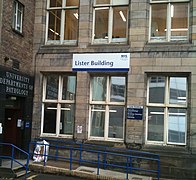
In 1903, the British Institute of Preventive Medicine was renamed Lister Institute of Preventive Medicine in honour of Lister.[195] The building, along with another adjacent building, forms what is now the Lister Hospital in Chelsea, which opened in 1985. The building at Glasgow Royal Infirmary which houses the cytopathology, microbiology, and pathology departments was named in Lister's honour to recognise his work at the hospital.[196] The Lister Hospital in Stevenage, Hertfordshire is named after him.[197]
Lister's name is one of twenty-three names featured on the frieze of the London School of Hygiene & Tropical Medicine[198] – although the committee which chose the names to include on the frieze did not provide documentation about why certain names were chosen and others were not.[199]
Lister is one of only two surgeons in the United Kingdom who have the honour of having a public monument in London, Lister and John Hunter. The statue of Lister, created by Thomas Brock in bronze in 1924, stands at the north end of Portland Place.[200] There is a bronze statue of Lister, mounted on a granite base in Kelvingrove Park, Glasgow that was sculpted by George Henry Paulin in 1924. It sits next to the statue of Lord Kelvin.[201]
The Discovery Expedition of 1901–1904 named the highest point in the Royal Society Range, Antarctica, Mount Lister.[202]
In 1879, Listerine antiseptic (developed as a surgical antiseptic but nowadays best known as a mouthwash) was named by its American inventor, Joseph Lawrence, to honour Lister.[203]
Microorganisms named in his honour include the pathogenic bacterial genus Listeria named by J. H. H. Pirie, typified by the food-borne pathogen Listeria monocytogenes, as well as the slime mould genus Listerella, first described by Eduard Adolf Wilhelm Jahn in 1906.[204]
Lister is depicted in the Academy Award-winning 1936 film The Story of Louis Pasteur, by Halliwell Hobbes. In the film, Lister is one of the beleaguered microbiologist's most noted supporters in the otherwise largely hostile medical community, and is the key speaker in the ceremony in his honour.
Two postage stamps were issued in September 1965 to honour Lister on the centenary of his antiseptic surgery at the Glasgow Royal Infirmary of Greenlees, the first ever recorded instance of such treatment.[205]
Gallery


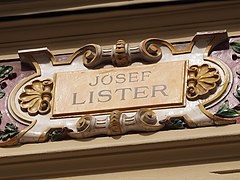
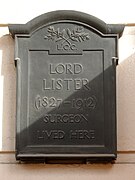

Bibliography
Papers
These are some of Lister's most important papers:
- Lister, Joseph (1 January 1853). "Observations on the Contractile Tissue of the Iris". Journal of Cell Science. s1-1 (1): 8–17. doi:10.1242/jcs.s1-1.1.8.
- Lister, Joseph (1853). "Observations on the Muscular Tissue of the Skin". Journal of Cell Science. The Company of Biologists Ltd. s1-1 (4): 262–268. doi:10.1242/jcs.s1-1.4.262. ISSN 0021-9533. Retrieved 19 August 2020.
- Lister, Joseph (January 1858). "On the Minute Structure of Involuntary Muscular Fibre". Journal of Cell Science. s1-6 (21): 5–14. doi:10.1242/jcs.s1-6.21.5. ISSN 0021-9533.
- Lister, Joseph (1 January 1858). "Proceedings of Societies: Observations on the Flow of the Lacteal Fluid in the Mesentery of the Mouse". Journal of Cell Science. s1-6 (21): 81–82. doi:10.1242/jcs.s1-6.21.81b. ISSN 1477-9137.
- Lister, Joseph (1858). "An Inquiry Regarding the Parts of the Nervous System Which Regulate the Contractions of the Arteries". Philosophical Transactions of the Royal Society of London. Royal Society. 148: 607–625. Bibcode:1858RSPT..148..607L. JSTOR 108676.
- Lister, Joseph (31 December 1858). "XXIX. An inquiry regarding the parts of the nervous system which regulate the contractions of the arteries". Philosophical Transactions of the Royal Society of London. 148: 607–625. doi:10.1098/rstl.1858.0029.
- Lister, Joseph (31 December 1858). "On the early stages of inflammations". Philosophical Transactions of the Royal Society of London. Royal Society. 148: 645–702. ISSN 0261-0523. JSTOR 108678.
- Lister, Joseph (21 September 1867). "On the Antiseptic Principle in the Practice of Surgery". BMJ. 2 (351): 246–248. doi:10.1136/bmj.2.351.246. PMC 2310614. PMID 20744875.
- Lister, Joseph (March 1867). "On a New Method of Treating Compound Fracture, Abscess, etc., with Observations on the Conditions of Suppuration". The Lancet. 89 (2272): 326–329. doi:10.1016/S0140-6736(02)51192-2.
- Lister, J (January 1870). "On the Effects of the Antiseptic System of Treatment Upon the Salubrity of a Surgical Hospital". The Lancet. 95 (2418): 4–6. doi:10.1016/S0140-6736(02)31273-X.
- Lister, Barron Joseph (1878). On the lactic fermentation and its bearings on pathology. London: J.E. Adlard. OCLC 30715167.
Lectures
- Lister, Joseph (6 October 1900). "The Huxley Lecture". BMJ. 2 (2075): 969–977. doi:10.1136/bmj.2.2075.969. PMC 2463910. PMID 20759189.
Collected papers
Two quarto volumes of Lister's collected papers, that were prepared by Sir Hector Charles Cameron , Sir W. Watson Cheyne, Rickman J. Godlee and C.J. Martin, Dawson Williams:
- Baron Joseph, Lister; Cameron, Hector Clare (1909). The collected papers of Joseph Baron Lister. 1. Oxford University Press, Hodder and Stoughton. OCLC 838259550.
- Baron Joseph, Lister; Cameron, Hector Clare (1909). The collected papers of Joseph Baron Lister. 2. Oxford University Press, Hodder and Stoughton. OCLC 841851608.
Influences
- Pasteur, Louis (19 May 1861). Sur les corpuscules organisés qui existent dans l'atmosphère, examen de la doctrine des générations spontanées (in French). Paris: Society of Chemists of Paris. Retrieved 29 October 2021.
- Pasteur, Lister (June 1863). "Examen du rôle attribué au gaz oxygène atmosphérique dans la destruction des matières animales et végétales après la mort". COMPTES RENDUS DES SÉANCES DE L'ACADÉMIÉ DES SCIENCES. TABLES ALPHABÉTIQUES. paris: Académie des sciences. pp. 734–740. Retrieved 29 October 2021.
- Pasteur, Louis (1863). "Recherches sur la putréfaction". Comptes rendus hebdomadaires des séances de l'Académie des sciences (in French). French Academy of Sciences. 56: 1189–1194.
Articles on specific events
- Best, A. E. (January 1970). "REFLECTIONS ON JOSEPH LISTER'S EDINBURGH EXPERIMENTS ON VASO-MOTOR CONTROL". Medical History. 14 (1): 10–30. doi:10.1017/S0025727300015106. PMC 1034011.
- Richardson, Ruth; Rhodes, Bryan (20 December 2013). "Joseph Lister's first operation". Notes and Records of the Royal Society. 67 (4): 375–385. doi:10.1098/rsnr.2013.0033.
Article on the 1877 lecture:
- Richardson, Ruth (20 September 2013). "Inflammation, suppuration, putrefaction, fermentation: Joseph Lister's microbiology". Notes and Records of the Royal Society. 67 (3): 211–229. doi:10.1098/rsnr.2013.0034.
Article on Lister rolls:
- King, Louise (1 November 2011). "The Lecture Rolls of Sir Joseph Lister". The Bulletin of the Royal College of Surgeons of England. 93 (10): 369–369. doi:10.1308/147363511X13158258989956.
Article on Lister collection at the Royal Collection of Surgeons
- Alberti, Sam (1 March 2012). "Saints and Sinners: Joseph Lister". The Bulletin of the Royal College of Surgeons of England. 94 (3): 90–91. doi:10.1308/147363512X13189526440393.
| This article uses material from the Wikipedia article Metasyntactic variable, which is released under the Creative Commons Attribution-ShareAlike 3.0 Unported License. |